
Advisory at the intersection of policy, capital, and spatial strategy.
I work with decision-makers on how cities grow, adapt, and perform — focusing on strategic positioning, implementation, governance, and investment logic.
Urban Transformation & Growth.
Cities don’t fail because of bad ideas. They fail because no one decides how they should grow – I help defining where, in what form, and under which rules cities develop, turning ambition into spatial direction.
Spatial Strategy for Investment.
Urban form follows investment. Understanding this is the difference between strategy and illusion – I advice where and how capital meets the city, aligning spatial decisions with value creation and long-term viability.
Climate & Urban Systems.
Adaptation is not a policy ambition but a spatial and economic necessity – I support addressing heat, water, and risk at the scale of the city, embedding resilience into infrastructure, planning, and governance.
Governance & Implementation.
Most plans are never implemented – I work on the ones that are by turning strategy into action. in structuring institutions, processes, and decisions that make change happen.
I don’t deliver reports. I work with decision-makers.
Typical engagements range from focused strategic input to longer-term advisory roles.
CLIMATE-LED
SPATIAL STRATEGY
Shenzhen, China
Transformation of a coastal development area through the integration of ecological systems, tourism, and urban growth, using landscape and water as structuring elements.
Resulting in:

Transformation
Strategy
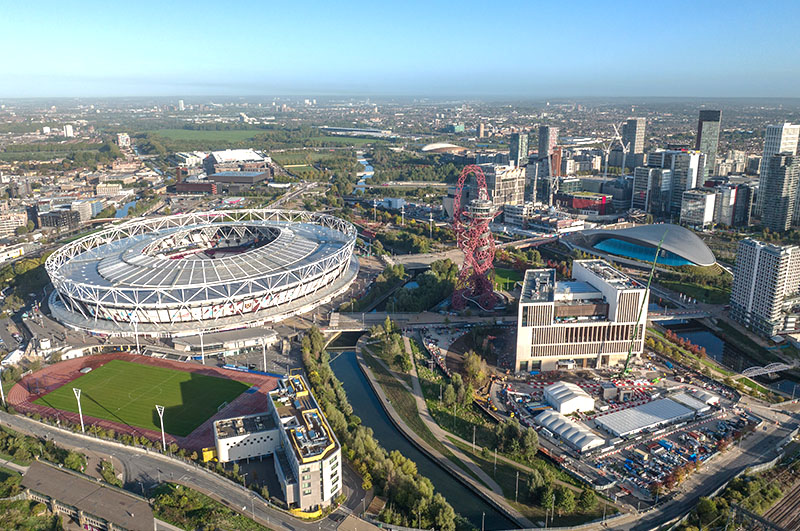
London, United Kingdom
Transition of the Olympic Park into a new, mixed use city district, providing for flexible adaptation and investment-driven gradual implementation.
Resulting in:
National Spatial
Development Reform
Saudi Arabia
Comprehensive reform of spatial development from a legal, policy, strategy and management perspective.
Resulting in:

Cities don’t shape themselves.
I am an urban strategist working at the intersection of policy, capital, and spatial development. My work focuses on how cities and regions transform under conditions of economic pressure, demographic change, and climate risk — and how this transformation can be structured to deliver long-term performance.
Over more than two decades, I have advised governments, metropolitan regions, and development entities across Europe, the Middle East, Africa, and Asia. My experience spans national urban strategies, large-scale development frameworks, and governance reforms, often working directly with senior decision-makers on questions of growth, implementation, and institutional alignment.
My approach is grounded in the understanding that cities are not shaped by vision alone, but by decisions — where growth happens, how investment is directed, and how institutions operate. Rather than focusing solely on plans, my work addresses the mechanisms that enable change: governance, finance, and spatial strategy.
Alongside my advisory work, I am engaged in teaching, writing, and public discourse on the future of cities. My work explores themes such as housing, climate adaptation, and the structural challenges shaping urban development today.
I am Partner at MLA+, an international practice for urban strategy and design.
What Governments get wrong when they commission Urban Advice
Cities rarely fail for lack of examples, but for misunderstanding what they are trying to copy. What travels easily are visible outcomes, not the institutional conditions behind them. A transit system or housing model may seem transferable, yet up close they depend on specific political, legal, and administrative contexts. The challenge is not importing models but translating mechanisms, and that work is always slower and more complex than benchmarking suggests.
The Productive Inconvenience of Parking
Some of the most effective urban policies are also the simplest. A five-minute walk to a car may seem trivial, yet it reshapes daily behavior more reliably than any strategy or campaign. When driving requires a small effort, it stops being the default. Walking, cycling, and public transport take over not by persuasion, but by convenience. By placing cars just far enough away, cities can quietly align everyday choices with the mobility they claim to support.
The City of Tomorrow Will Not Be Built — It Will Emerge
The language we use to describe cities is starting to feel insufficient. Concepts like growth and sustainability blur as urban reality becomes more complex and entangled. The challenge is no longer to refine these terms, but to question whether they still apply.
The city of tomorrow will not appear as a clear model, but emerge gradually—layered, adaptive, and shaped by continuous change rather than control.
If you are shaping cities at scale, feel free to reach out.
markus@appenzelleradvisory.net
+31 6 433 614 57
Markus Appenzeller
Westewagenstraat 16
NL 3011AS Rotterdam